
The Problem with AI: Who Maintains Your App When It Breaks?
AI can help you ship faster. But when something breaks three months after launch, no AI tool is picking up the phone. Here is what the current hype cycle gets wrong about software ownership.
March 24, 2026 · BSB Tech Hub
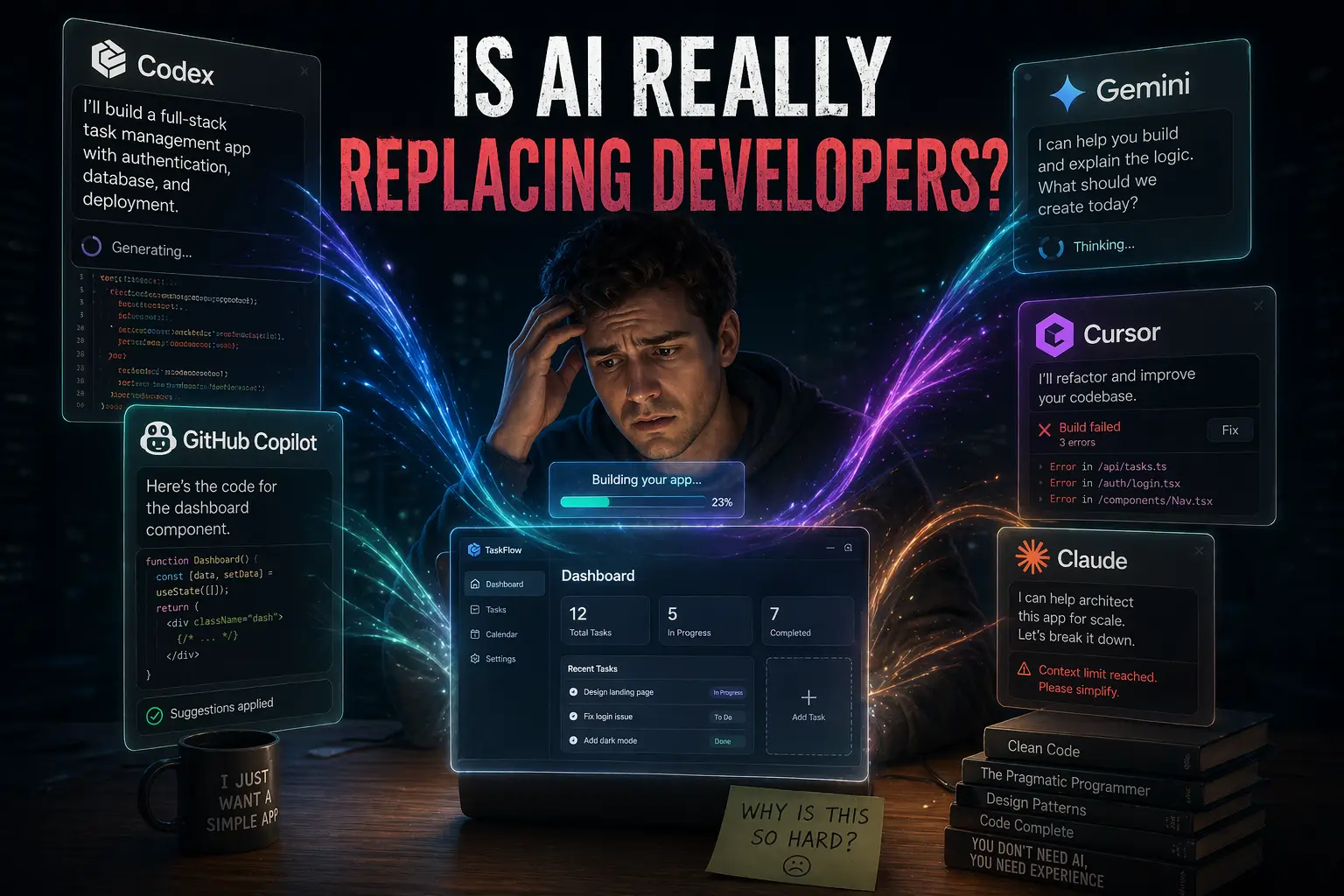
Imagine this: you have just launched a brand-new app, built in record time with the help of AI. The initial excitement is real. A few months later, a feature stops working. A security vulnerability is exposed. Who do you call? The AI that generated the code? This scenario reveals the most overlooked gap in the current AI hype — while AI can assist in building software, it cannot replace the expertise required for ongoing maintenance and ownership.
The appeal of AI-assisted development
AI tools that automate coding tasks and accelerate development timelines are genuinely useful. They can generate code snippets, surface relevant patterns, and identify classes of bugs faster than manual review. The appeal is clear, especially for teams trying to ship a first version quickly.
But there is a difference between a tool that helps a craftsman work faster and a tool that replaces the craftsman. AI, in its current state, is firmly in the first category. It augments skilled work. It does not substitute for it.
What happens after the build
The real cost of software is not the initial build. It is everything that comes after. Apps require ongoing updates, feature additions, performance tuning, and security patches. These are not mechanical tasks. They require judgment about tradeoffs, context about past decisions, and accountability for outcomes.
Complex problem solving
When an unexpected production issue surfaces, a developer needs to reason about the entire system — request flows, database state, third-party dependencies, edge cases in user behavior. That kind of diagnostic thinking requires experience and intuition that AI tools do not have.
Feature expansion over time
Adding new capabilities is not just about writing more code. It means understanding what users actually need, how new features interact with existing architecture, and where the system might break under increased load. That requires a developer who knows your product and your users.
Security and compliance
Cyber threats evolve continuously. A vulnerability that did not exist at launch may appear within six months. Developers stay current with security advisories, evaluate impact against your specific stack, and implement patches with the context needed to avoid regressions.
The gap between creation and ownership
Shipping a first version is one milestone. Owning the software lifecycle is an entirely different commitment. This is where many businesses underestimate the true cost — not the build, but the steady investment required to keep the product reliable, secure, and aligned with changing requirements.
AI cannot take that responsibility. A skilled development partner can.
What skilled developers actually provide
- Holistic understanding. Developers know the broader context of your product: business goals, user expectations, and the technical constraints that shape every decision.
- Adaptability. Technology and user needs change. Developers pivot the product accordingly, making sure it remains relevant rather than becoming legacy infrastructure.
- Accountability. A real developer owns the outcome. When something breaks at 2am, there is a person responsible for fixing it — not a prompt to re-run.
The right way to think about AI in development
AI is a productivity multiplier for skilled developers. A strong engineering team using AI tools ships faster, catches more issues earlier, and explores more solution paths before committing. The AI accelerates the work. The developer ensures the outcome is correct.
Treating AI as a replacement for development expertise tends to produce brittle products with no clear owner. The initial cost is lower. The long-term cost is not.
What this means for your next project
If you are evaluating how to build or maintain a software product, the question is not whether to use AI. It is who is accountable for the outcome. AI tools are useful. Human expertise is non-negotiable.
The businesses that get the most from AI in software development are the ones working with developers who know how to use it well — and who take full ownership of what gets built.
Share this article
Custom Software Development
See how we build and maintain software with real accountability behind every delivery.
Project Portfolio
Review real implementations and the outcomes they produced for our clients.
Talk to a Developer
Discuss your project with someone who will take ownership of the outcome.
More from the Blog
Explore more insights on software, automation, and digital transformation.